
Horizontal Axis Wind Turbines (HAWT)
D&J Innovance focuses on horizontal-axis windmills with a three-blade rotor and permanent-magnet generator technology. Review the main specifications and choose a capacity to discuss.
Compare the four turbine capacities.
Indicative turbine component pricing is based on ₹80,000 per rated kW. Specifications marked as design-dependent must be confirmed for the final model.
| Specification | 1.5 kW | 3 kW | 5 kW | 10 kW |
|---|---|---|---|---|
| Rated power | 1.5 kW | 3 kW | 5 kW | 10 kW |
| Output voltage | 24 V DC | 24 / 48 V DC configurable | 48 / 96 V DC configurable | 48–96 V DC |
| Generator | Permanent-magnet generator (PMG/PMA) | Permanent-magnet generator (PMG/PMA) | Permanent-magnet generator (PMG/PMA) | Permanent-magnet generator (PMG/PMA) |
| Rotor / blades | 15 ft (4.57 m) 3-blade composite rotor |
15 ft (approx. 4.5 m) 3-blade aerodynamic rotor · 7 ft blades |
18 ft (approx. 5.5 m) 3-blade aerodynamic rotor · 8.5 ft blades |
Confirm final rotor specification 3-blade aerodynamic rotor |
| Cut-in / start wind | 3 m/s (datasheet reference) | Approx. 2.5 m/s | Approx. 2.5 m/s | Approx. 2.5 m/s* |
| Rated wind reference | 12 m/s rated-output reference | 10 m/s rated-output reference | 11 m/s rated-output reference | As per final turbine design and test data |
| Standard support height | 6 m standard | 6 m standard; 10/12 m options may be available | 6 m standard; 10/12 m options may be available | 6 m standard support option |
| Important note | Confirm prototype and final test data before project sign-off. | Final pole height and electrical configuration are subject to site and system design. | Final pole height and electrical configuration are subject to site and system design. | Specifications marked design-dependent must be validated against the final model and test results. |
| Turbine component price | ₹ 120,000 | ₹ 240,000 | ₹ 400,000 | ₹ 800,000 |
The turbine works with matched electrical equipment.
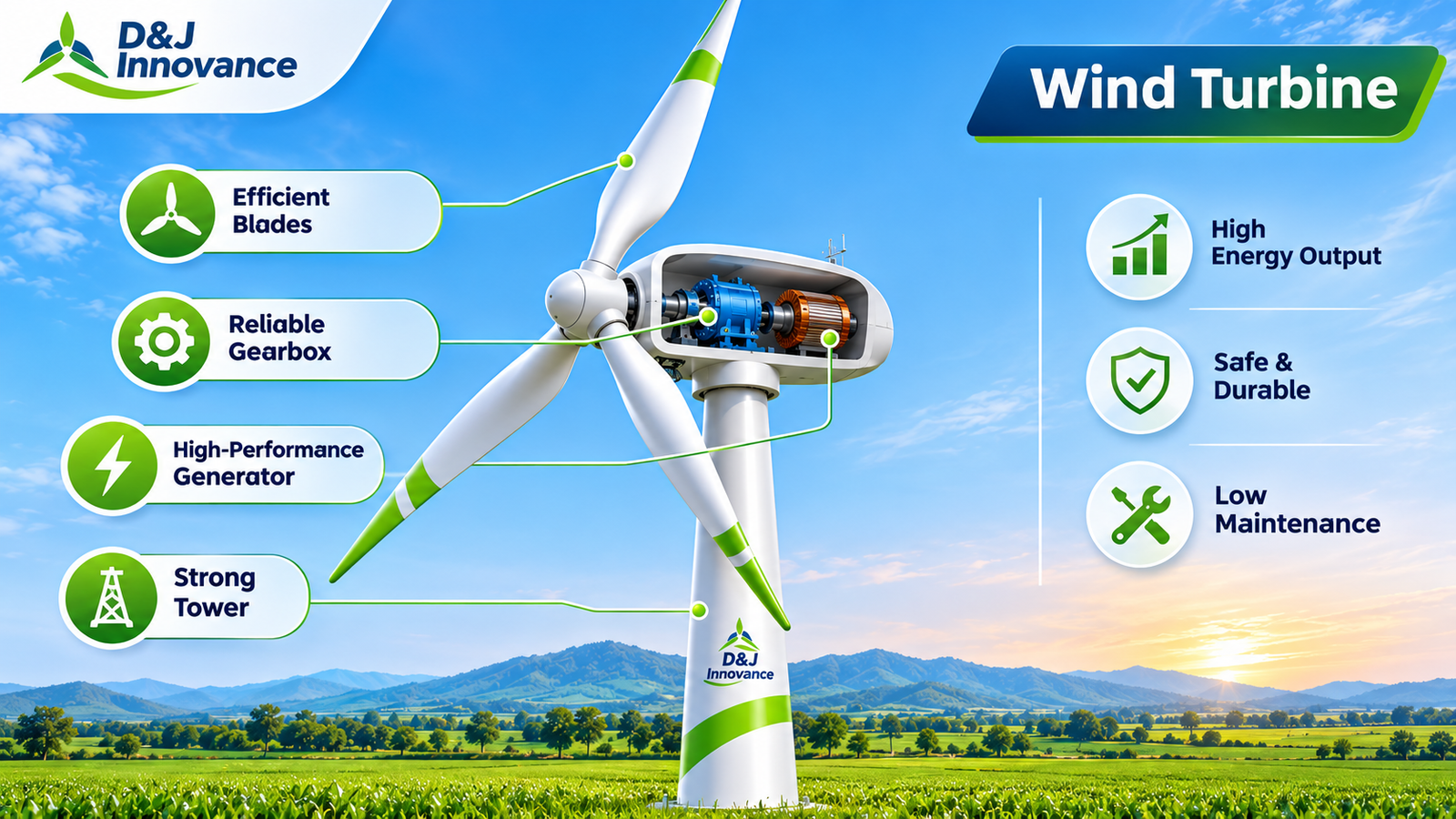
A typical system routes generation through rectification and wind-charge control, then to compatible storage and/or power conversion equipment.
- Permanent-magnet generator technology.
- Three-blade aerodynamic rotor.
- Matched wind charge controller and protection equipment.
- Battery bank and inverter where required by the application.
- Optional integration into a compatible Wind + Solar system.
Not sure which capacity fits your site?
Use your monthly consumption or appliance list to get a starting recommendation, then confirm site suitability with our team.