
Products · Battery & Backup

Battery Storage & Backup

Battery storage is optional. Add it when you need stored energy for backup or when your selected off-grid/hybrid system design calls for it. Estimate a battery bank using your load, voltage and backup hours.

24 V / 48 V options
Battery storage for wind and hybrid renewable-energy systems
Battery types

Compare common battery technologies.

The most suitable option depends on budget, usable capacity, expected cycling, available space and the compatible charging/inverter equipment.

Long-life lithium option

LiFePO4

Advantages

Often selected for frequent cycling, good usable capacity and long service-life targets.

Things to consider

Usually a higher initial investment; needs a compatible battery-management system and charger settings.

Compact energy storage

Lithium-ion

Advantages

High energy density and compact pack options for space-conscious designs.

Things to consider

Exact cell chemistry, BMS, charging limits and warranty depend on the selected battery pack.

Traditional backup option

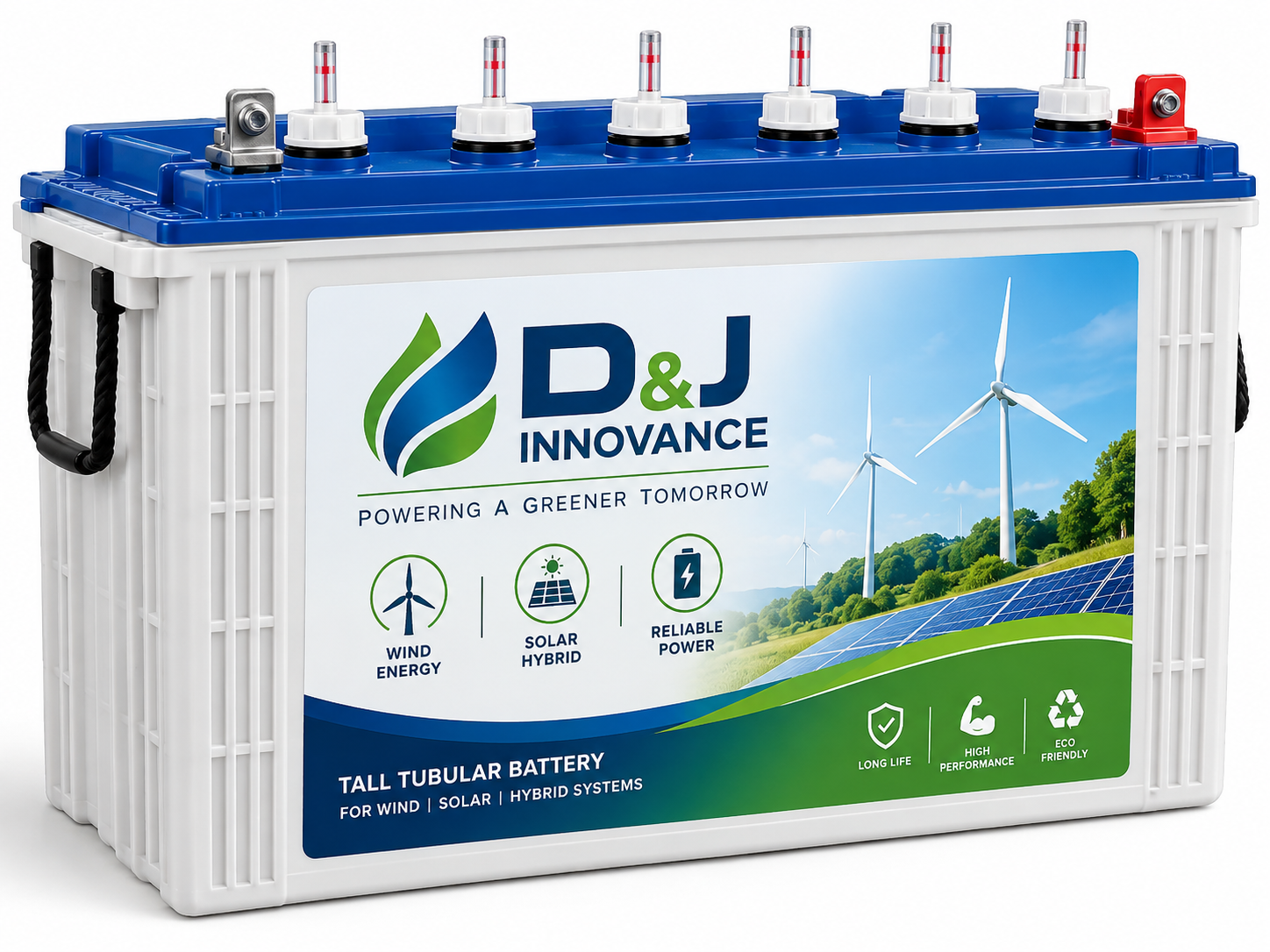
Tubular Lead-Acid

Advantages

Widely used backup technology that may offer a lower initial purchase cost.

Things to consider

Heavier, generally needs more space, and may need regular maintenance and suitable ventilation.

Reference price: 24 V · 100 Ah = ₹25,000. The estimate below scales from this reference and is intended for initial planning; the final battery quotation depends on the approved battery pack and configuration.
Battery sizing

How much backup do you need?

Choose the backup duration and add the appliances you want to keep running.

Appliance Quantity Watts / unit
Backup load0 W
Backup energy0 Wh
Suggested capacity0 Ah
Energy required (Wh) = total backup load (W) × backup hours. Battery energy (Wh) = voltage (V) × capacity (Ah). Battery results are preliminary capacity estimates. Final bank sizing should account for usable depth of discharge, conversion losses, battery chemistry, surge loads and the selected inverter.